
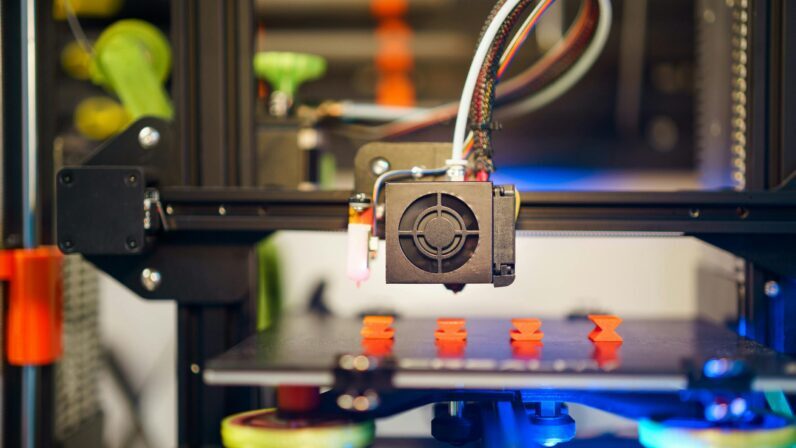
The landscape of manufacturing is evolving rapidly, with innovation at its heart. Two technologies, 3D printing and injection molding, stand at the forefront of this transformation. Each offers unique advantages and challenges, shaping industries in distinct ways. This comprehensive guide delves into the intricacies of both, aiming to illuminate why 3D printing often emerges as the preferred choice in the modern manufacturing saga.
3D printing and injection molding have revolutionized how we think about manufacturing. 3D printing, also known as additive manufacturing, builds objects layer by layer from digital models. Injection molding, on the other hand, involves injecting molten material into a mold to create objects. These methods have roots that stretch back decades, but their evolution has been marked by significant technological advancements.
The journey from the inception of 3D printing in the 1980s to its current state reflects a saga of innovation. Similarly, injection molding, with its origins in the late 19th century, has undergone transformations that have optimized its efficiency and application scope.
What Are the Basic Principles of 3D Printing?
3D printing transforms digital blueprints into tangible objects through a process known as additive manufacturing. It layers materials, such as plastic, metal, or resin, building objects from the ground up. This method is celebrated for its precision and versatility, allowing the creation of complex designs that would be difficult, if not impossible, to achieve through traditional means.
Different Types of 3D Printing Technologies
- Fused Deposition Modeling (FDM): Utilizes thermoplastic filaments, which are heated and extruded to form layers.
- Stereolithography (SLA): Employs ultraviolet (UV) lasers to solidify photosensitive resins, layer by layer.
- Selective Laser Sintering (SLS): Fuses small particles of polymer powder using a high-powered laser.
What Are the Basic Principles of Injection Molding?
Injection molding services is a manufacturing process for producing parts by injecting molten material into a mold. It is particularly suited for mass-producing parts with a high degree of consistency.
Key Components
- Mold: The custom-designed cavity that shapes the part.
- Injection Unit: Melts and injects the material into the mold.
- Clamping Unit: Holds the mold closed under pressure.
Why Choose 3D Printing Over Injection Molding?
The benefits of 3D printing over injection molding are manifold, particularly when it comes to customization, complexity, and speed.
What Are the Cost Implications?
3D printing often requires lower upfront costs compared to injection molding, which necessitates expensive molds. This makes 3D printing more accessible for small-scale production and prototyping.
How Do Materials Compare in 3D Printing and Injection Molding?
The range of materials available for 3D printing continues to expand, offering versatility that can meet or exceed that of injection molding in many applications.
- Plastics: Widely used in both processes, but 3D printing offers more variety.
- Metals: 3D printing enables working with complex metal alloys.
- Glass: 3D Printing In Glass is a breakthrough technology, harnessing the elegance of glass and the precision of 3D printing. The process is a symphony of precision, where temperature and movement are orchestrated to create intricate designs out of glass.
- Composites: Unique to 3D printing, offering enhanced properties.
What About Customization and Complexity?
3D printing excels in producing complex designs with a high degree of customization without significant additional cost. It is an excellent choice for rapid prototyping and manufacturing.
Speed and Time-to-Market Considerations
Can 3D Printing Really Speed Up Product Development? – Yes, 3D printing significantly reduces the time from design to prototype, accelerating product development cycles.
Environmental Impact and Sustainability
3D printing can be more sustainable than injection molding, with less waste produced and the potential for using recycled materials.
When Might Injection Molding Be the Better Choice?
Despite the advantages of 3D printing, injection molding remains the preferred method for high-volume production due to its speed and cost efficiency at scale.
Exploring the Versatility of 3D Printing
3D printing has found applications in numerous industries, demonstrating its versatility and adaptability.
- Healthcare: Custom prosthetics and implants
- Automotive: Prototype parts and complex components
- Aerospace: Lightweight, strong parts for aircraft
- Fashion: Innovative designs and custom fittings
Understanding the Limitations of 3D Printing
While 3D printing offers many advantages, it also has limitations, including material and size constraints, that impact its applicability in certain contexts.
Material Limitations and Strength Concerns
The strength and durability of 3D printed materials can vary, affecting their suitability for certain applications.
Size Limitations and Scaling Issues
The physical dimensions of 3D printers limit the size of parts that can be produced, which may be a constraint for some projects.
Future Trends in 3D Printing and Injection Molding
Innovation continues to drive both technologies forward, with new materials, processes, and applications being explored. The future promises even greater integration of 3D printing in manufacturing, potentially overcoming current limitations and offering new possibilities.
Making the Decision: Factors to Consider
Choosing between 3D printing and injection molding involves considering multiple factors, including project scale, complexity, budget, and time constraints.
Step-by-Step Guide to Implementing 3D Printing in Manufacturing
Integrating 3D printing into manufacturing processes requires careful planning and execution, from concept development through to final product creation.
Conclusion
The decision between 3D printing and injection molding hinges on specific project needs, but the versatility, speed, and customization offered by 3D printing make it an increasingly popular choice. As technologies evolve, the potential for 3D printing in manufacturing only broadens, promising a future where its applications are limited only by the imagination.
Author: Peter Yordanov – Industrial 3D Printing for Flexible Manufacturing.