
User-friendly 3D design software
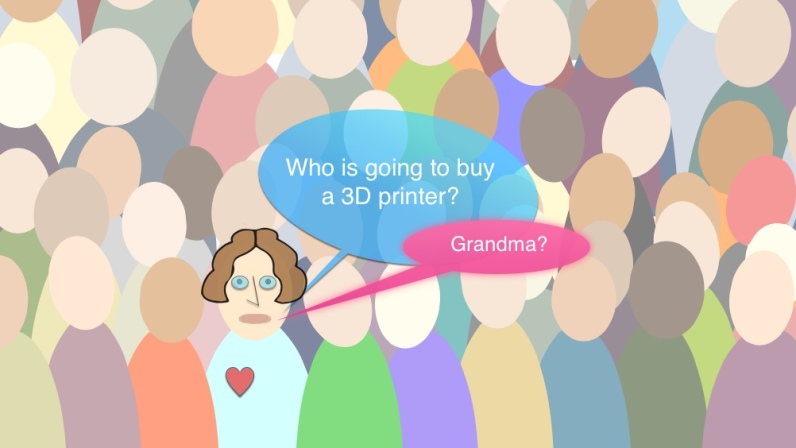
Reading an article in the Economist today, we think they have missed a few important points. They have correctly identified that 3D printer sales to consumer markets will be driven by the quality and ease of using 3D design software. Moreover, such types of software offered in the cloud are likely to become increasingly available, if not the norm. However, in our opinion there is another angle concerning the functionality offered by such online software.
As the original article in the Economist points out, 3D printers can make any number of things from houses to lampshades to toy figurines. However without cheap, easy to use but comprehensive modelling software, the reach of 3D printer sales in consumer markets will be minimal. In part, this is perhaps true but only upto a point. It fails to consider a different emphasis. The real boost to greater adoption of 3D printers is to have software like that offered by Sketchup.
3D Models To Be Customized
This design software is not only easy to use but it also encourages modification of a pre-designed models held in its very large repository of existing items. In fact, the easier the process of customisation becomes, the more likely ordinary folk will start to consider 3D printers as part of their home based tool set, along with spanners, drills, lawn mowers, etc. Demand will also increase as the number and variety of objects become available to modify and personalize. Especially those products which possess a desirable quality or offer utility.
Moving away from focussing only on those trying to be truly creative or innovative, it is highly likely that a model for 3D printing some basic item already exists. Sure it may not be an exact fit for the intended purpose or meet the specific desire of the customer but if the item can be easily customised or personalised then most of the battle has been won. This should be the main focus for the software providers and especially those providing services online. The ability to scale or re-dimension an item, join items together, modify a few angles and change a finish gets at most of the customer’s need.
Indeed, Juniper Research predicts that 3D printer sales will only reach about 1m units in the next four years. If true, the manufacturers of 3D printers are going to have ‘egg on their faces’ and so are the investors in those companies. In fact, reading between the lines, they are saying that consumer interest is not going to be in owning a printer but perhaps in designing and customising items; which can then be outsourced to a 3D printing service. For example, like the Find a 3D printer service which will geo-locate 3D print shops that will provde a quote (try it out!). The database already contains in excess of 5000 print shops.
Whatever a consumer decides to print, most of of them will want easy to use 3D modelling software and a large library of items which can be easily modified and combined. They do not want to become design experts and invest their time in learning complex software and the engineering techniques which underpin it.
For the consumer less is often more.
It is a lesson that those who wish to market technology to consumer based markets will be at pains to ignore. They need to get modelling software down to a few dozen options for 90% of the potential users.